
Hitch & Tow · Reviewed

Rock Tamers Mud Flaps.

Mounted directly to the hitch itself, wide enough to cover the full tire path. On every trip since.

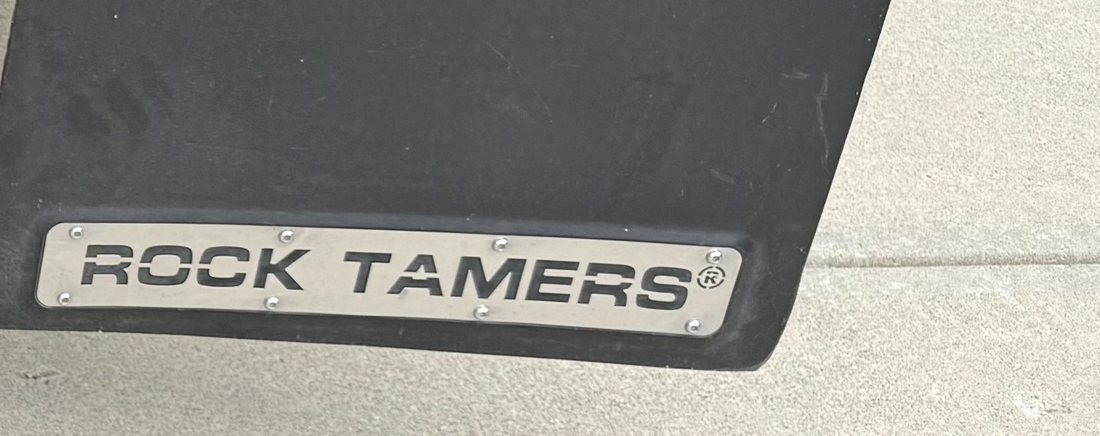
Close-up of a Rock Tamers mud flap mounted at the hitch
Mud flaps · Every trip

Rock Tamers Mud Flaps

In Dan's words: “These do an outstanding job of protecting the front of the Airstream when traveling.”
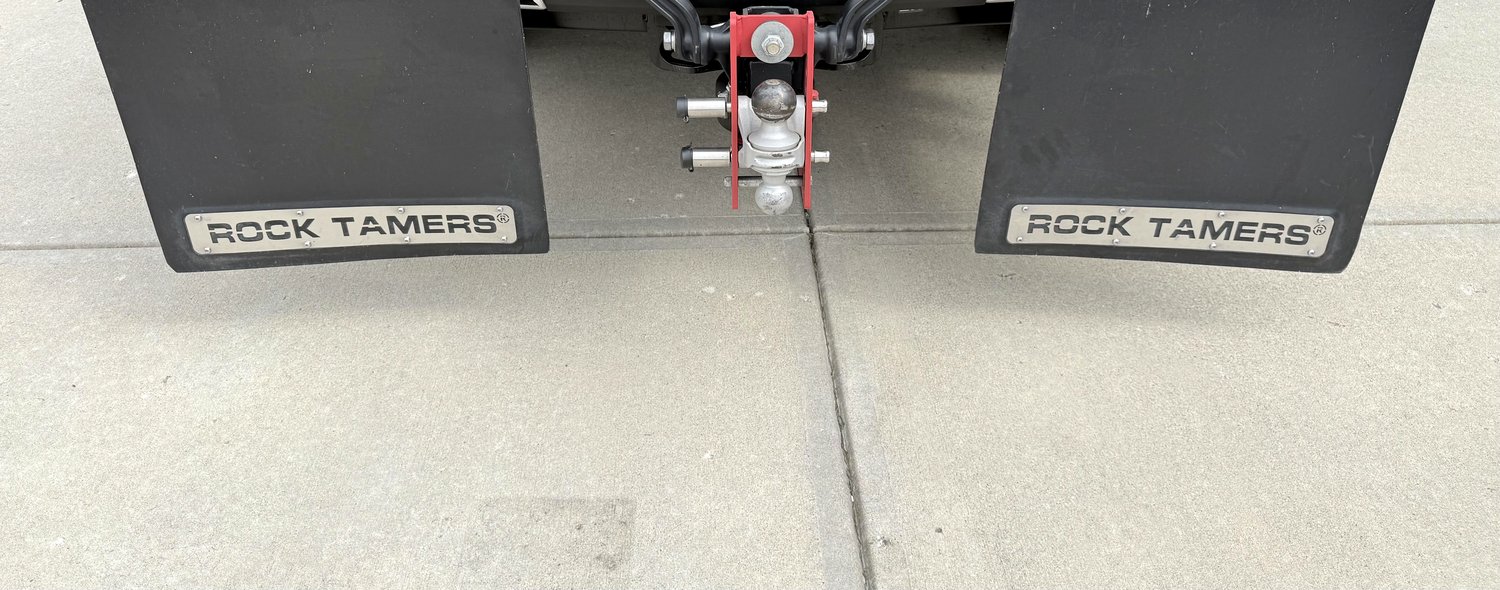
Both Rock Tamers mud flaps mounted directly to the hitch, full width, viewed head-on
Mounted at the hitch, both sides

Full Width, Both Sides

Mounted directly to the hitch itself, between the hitch and the truck, wide enough to cover the full tire path on both sides, not just a narrow strip down the middle.

Why We Run It

Towing a trailer this size kicks up plenty of road debris directly onto whatever's behind it, and factory mud flaps, on the rare truck that even has them back there, usually aren't sized for a rig this wide. Rock Tamers mount directly to the hitch itself, sandwiched between the receiver and the truck, and stretch out to cover the full tire path on both sides.

What We Actually Notice

“These do an outstanding job of protecting the front of the Airstream when traveling.”

That's the whole point of them, and it's held up: no fresh rock chips on the nose cap or the front windows after a long highway day.

Pros and Cons

Pros

  • Covers the full width of the truck's rear tire path on both sides, not just a narrow strip down the middle.
  • Mounts directly to the hitch itself, between the hitch and the truck, so there's nothing extra to bolt to the frame or bumper.
  • Genuinely effective: no fresh rock chips on the Airstream's nose cap or front windows since we installed them.
  • Available with an optional exhaust-cutout screen for trucks that route the tailpipe out the back instead of to the side, so the heat doesn't damage the rubber flap.

Cons

  • Hangs a bit lower than a stock hitch alone, so it's one more thing to watch clearance on for a steep driveway or curb.
  • Mounted right at the hitch, so it catches road spray and mud first and needs an occasional wash to keep the branding legible.
  • Not adjustable in the field. What you see is what you get, for better or worse.
  • Can confuse a truck's backup sensors when not towing, triggering nuisance warnings or even automatic braking. Usually shows up when the trailer's unhitched and the flaps are the closest thing back there.

The Verdict

Simple, effective, and not something we think about, which is exactly the point. It just does its job every time we hitch up.

← Back to Hitch & Tow