Highways · Newfoundland · Cox Cove
 Written by Heather
I spent my career building flight plans and watching the weather instead of flying the plane myself, so there's something different, and satisfying, about a trip that starts by hooking up the Airstream and hitting the highway instead. We towed our 25-foot Flying Cloud, our trailer before the 33-foot Classic, all the way to Newfoundland's west coast for a fishing excursion in Cox Cove. It turned into one of the best stops of the trip.
We went in May 2025, a few weeks before peak season, and booked a three-hour tour that just happened to be only our family on the boat.
Cox Cove sits on a long, quiet arm of water on Newfoundland's west coast. Rock cliffs and spruce come right down to the shoreline.
In May, before the season really gets going, the water is glass-still and the cliffs still hold streaks of snow up in the folds where the sun doesn't reach.
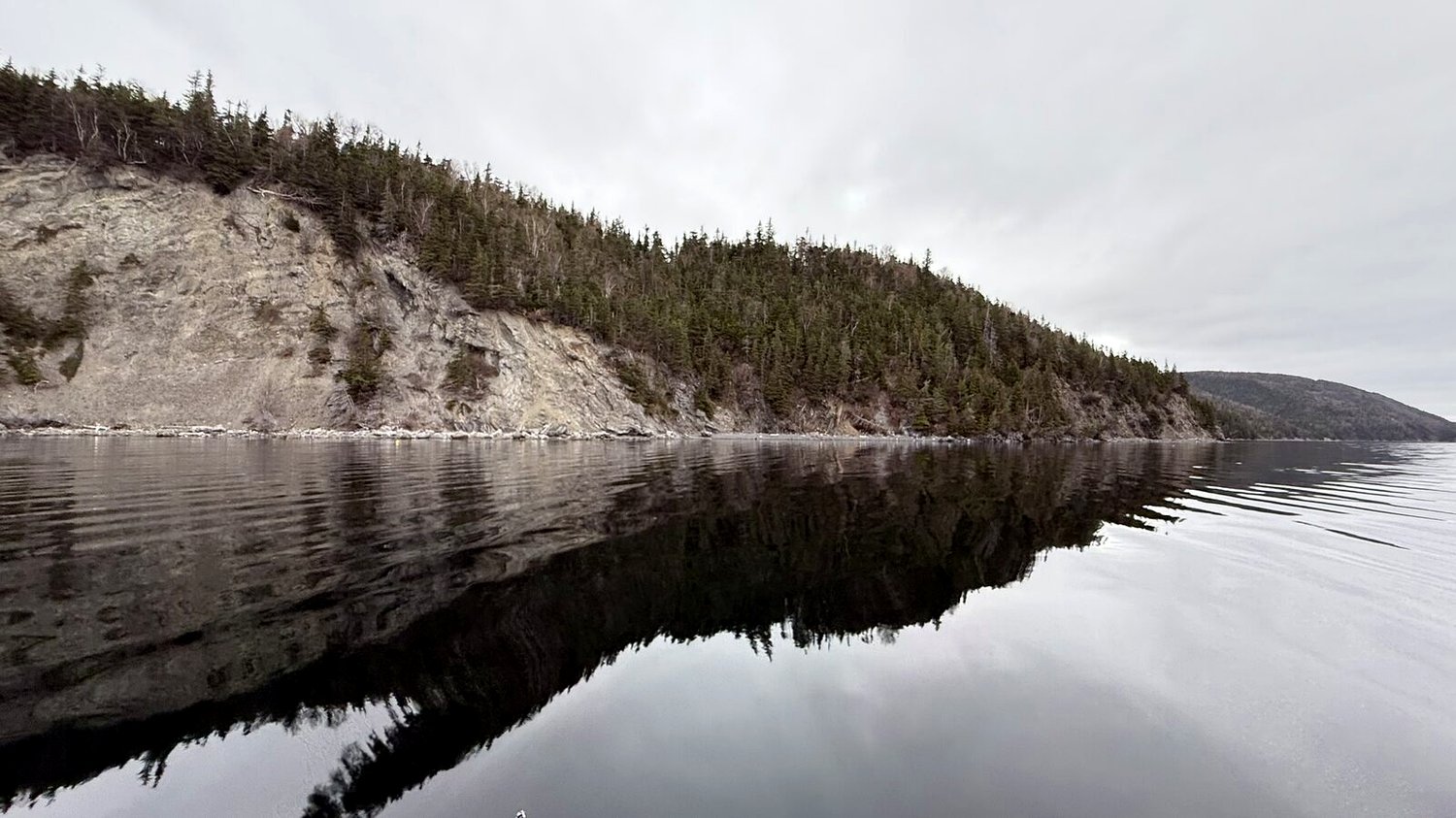
Dead calm water, mirroring the cliffs almost perfectly.
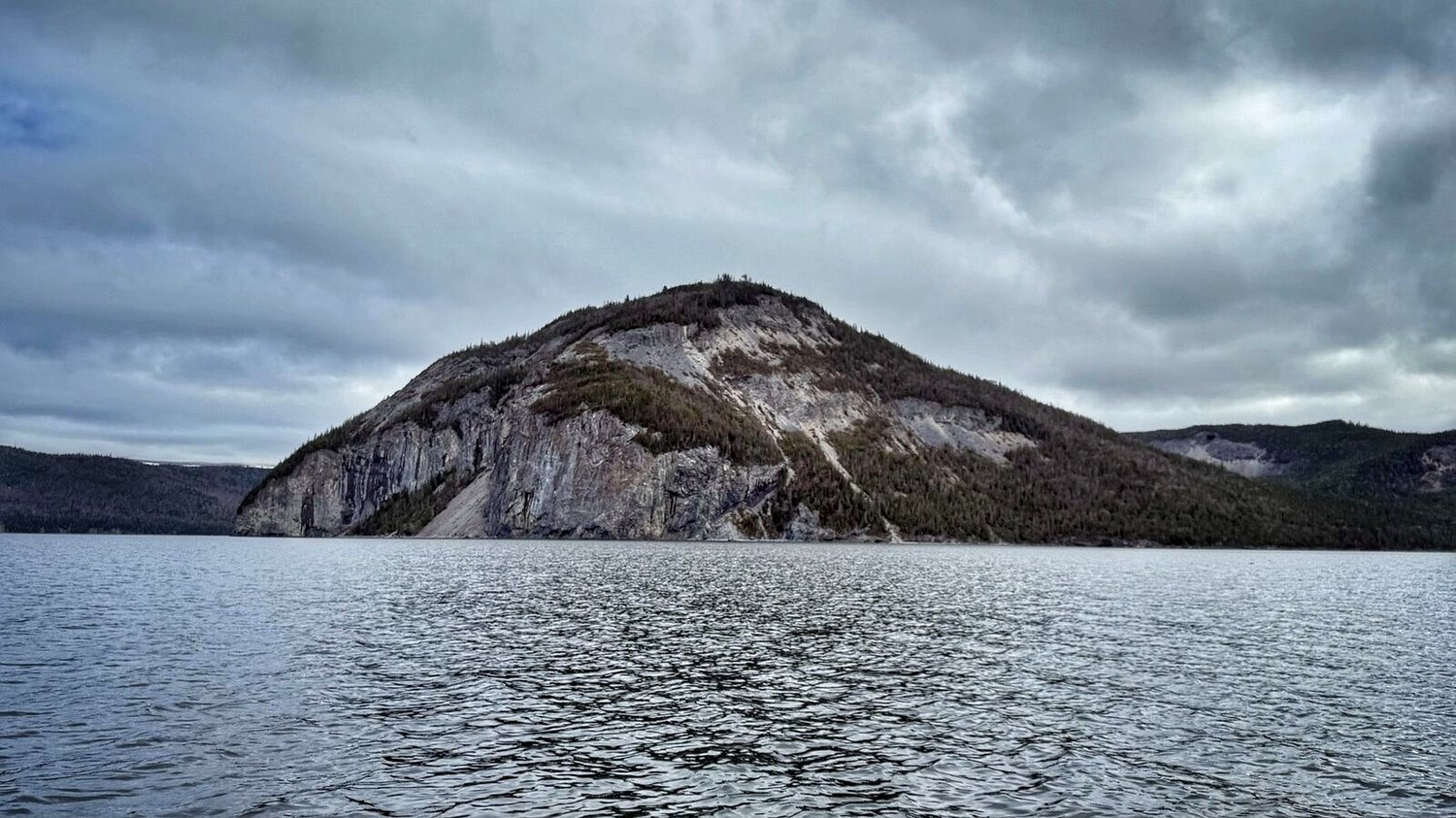
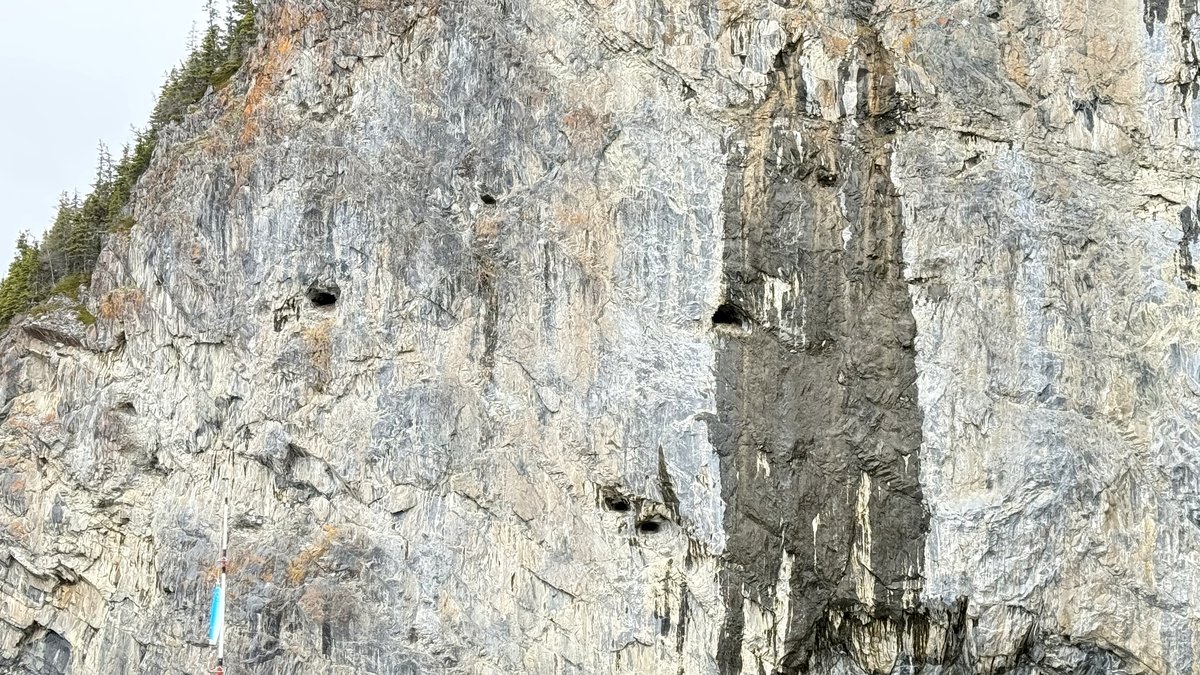
The holes scattered across that rock face aren't natural. They're from cannonballs. Long ago, the British Navy used this stretch of cliff for artillery practice, sighting their guns and training sailors by firing at the mountainside from ships docked in the cove. Some of those cannonballs are still embedded in the rock today.
Coastal Newfoundland weather doesn't care about your travel plans, and we spent the week leading up to the trip nervous about whether it would even happen. Darren called us multiple times in the days before the tour to keep us posted on the go/no-go decision. That kind of proactive communication is easy to overlook until you're the one anxiously checking the forecast, wondering if the whole drive out there was for nothing.
We booked through 4 Seasons Tours, owned and operated by Darren Park, who guided us himself. Cox Cove doesn't have a dock for this kind of trip, so you board straight from shore. That detail mattered more than I expected. My dad isn't as steady on his feet as he used to be, and getting him into a boat over loose rock takes patience, not just muscle. Darren had both. He talked my dad through every step, timed the water, and made the whole thing feel routine instead of risky.
That's the kind of thing a brochure never mentions, but it's the difference between a trip you enjoy and one you white-knuckle through.
We fished from a traditional dory boat: flat-bottomed, high-sided, and part of Newfoundland's fishing culture for generations, with just a motor bolted on for getting around the cove. They're narrow and stable in a way that surprises you, built for exactly this kind of coastal water. Ours was handcrafted by local craftsmen, not mass-produced. It showed in the details, right down to the paint job.
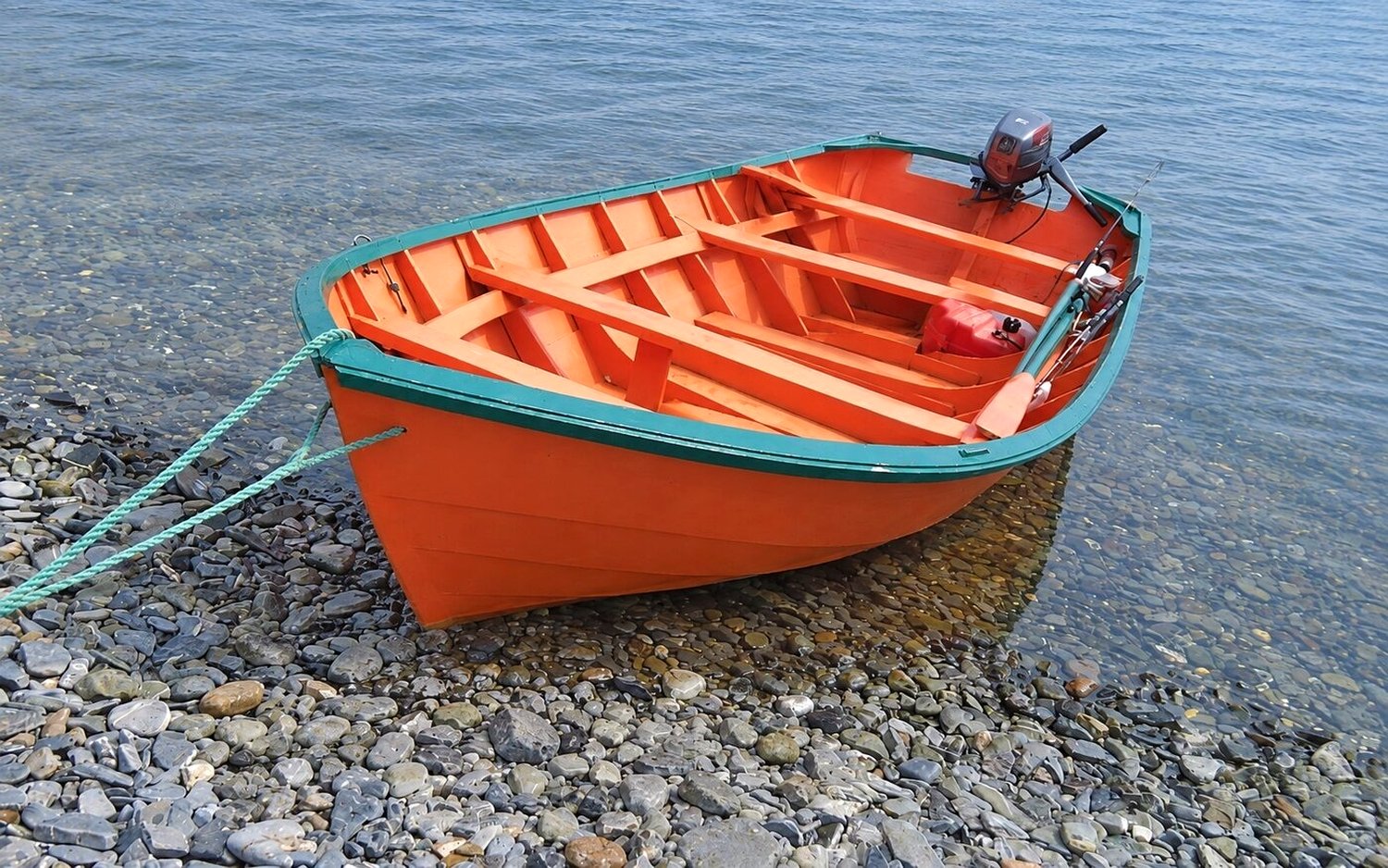
Handcrafted by local craftsmen, pulled up onto the shore.
There's something grounding about fishing from a boat with that much history behind its design. It's not a rental pontoon; instead, it's the same style of vessel that put food on tables here for a couple hundred years, just updated enough to be practical.
Going before prime season meant:
If you value quiet and a slower pace over guaranteed volume of fish, going in the shoulder season is worth the extra thought.
We caught an ocean perch, a bottom feeder that eagles love but almost never get to eat. Eagles can catch these fish occasionally when one strays too close to the surface.
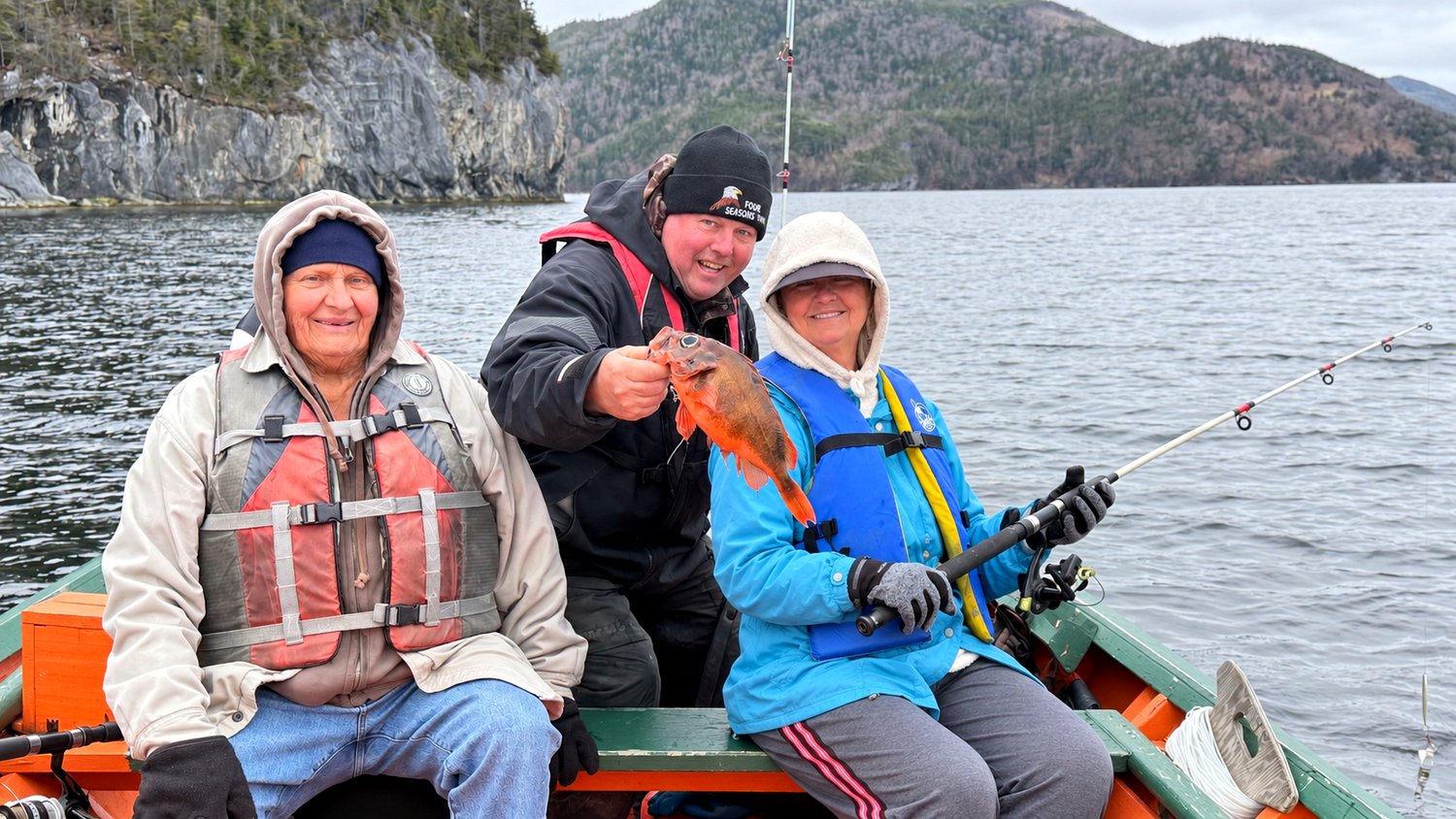
Darren holding up our catch, right before it became eagle bait.
Darren knew exactly where the local eagle nests were. Instead of keeping the fish, we tossed it back onto the surface of the water so the eagles could swoop down and take it. Watching one drop out of the sky and snatch a fish it doesn't often get the chance to catch was the highlight of the day, hands down. That's not something you plan for. It's something a guide who actually knows the water and the wildlife sets up for you.
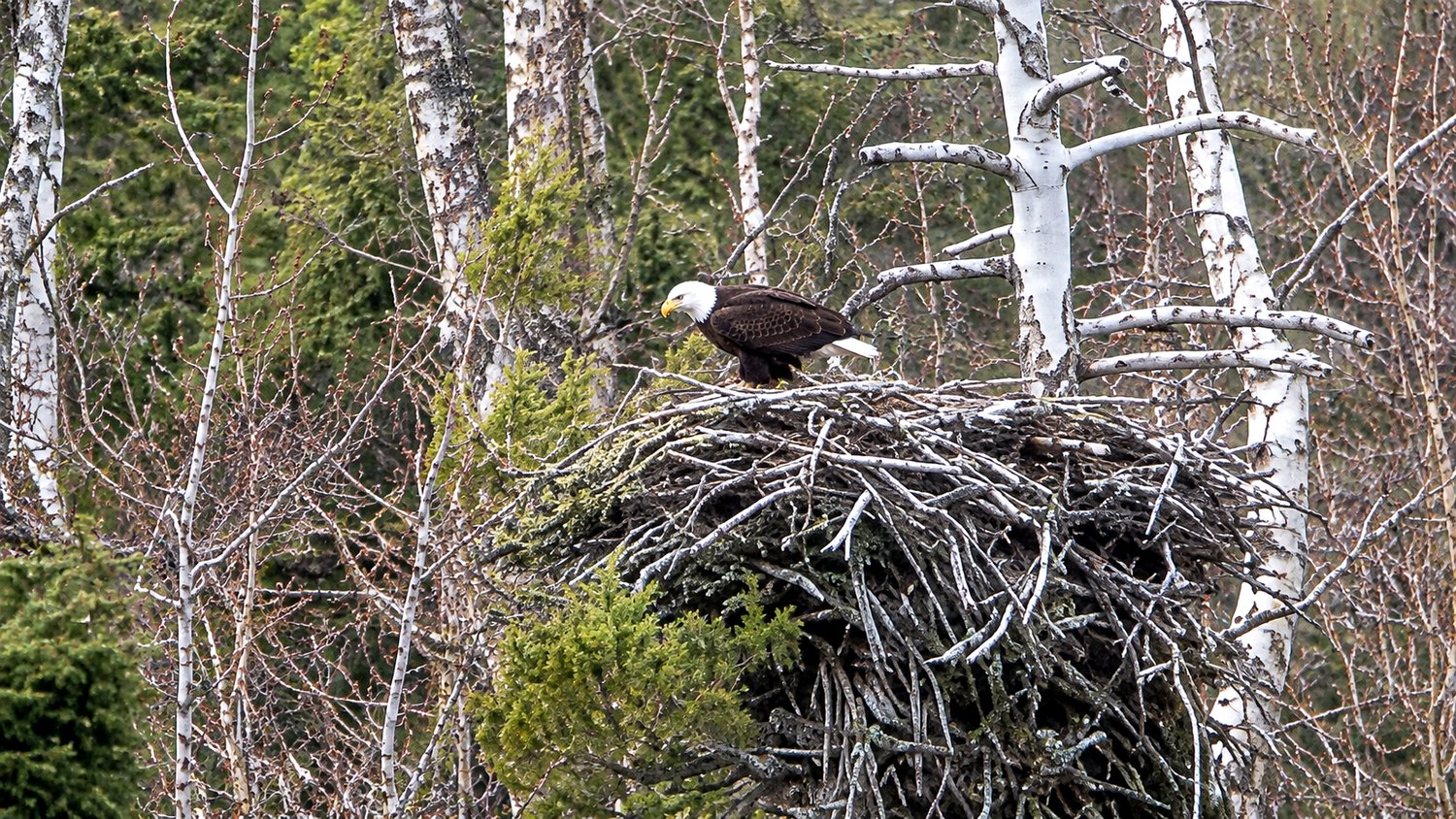
The mamma eagle who swooped in for our perch, a well-known local along the shoreline.
My husband had his phone out the whole time, lined up and ready to catch it on video. It wasn't until after the eagle had already come and gone that he realized he'd never actually hit record. He filmed the whole hunt on a phone that recorded nothing, so the best moment of the trip lives only in memory. The irony of the story is that he's a part-time filmmaker, for the record (pun intended). I have never let him forget that the one shot he actually needed is the one he missed, and every eagle we've seen since gets a running commentary from me about whether the camera is, in fact, recording this time.
Darren wasn't just running us through a route. He knew the history of Cox Cove, pointed out landmarks and stories along the shoreline, and clearly cared about the area beyond just getting clients on and off the water.
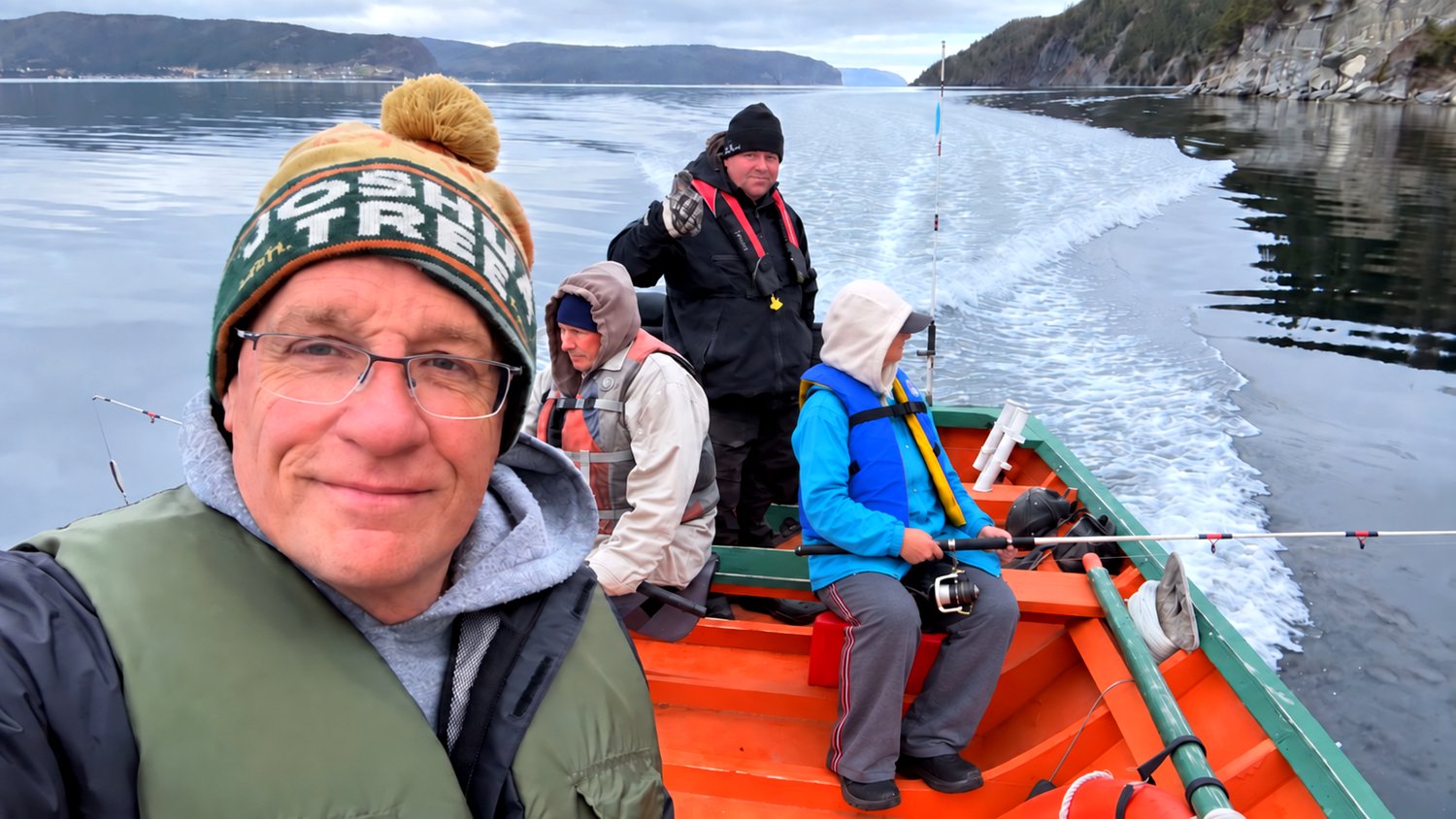
The crew, with Darren, out on the water.
He also tipped us off to a local lobster fisherman selling fresh-caught lobster at a genuinely fair price, which became dinner that night.
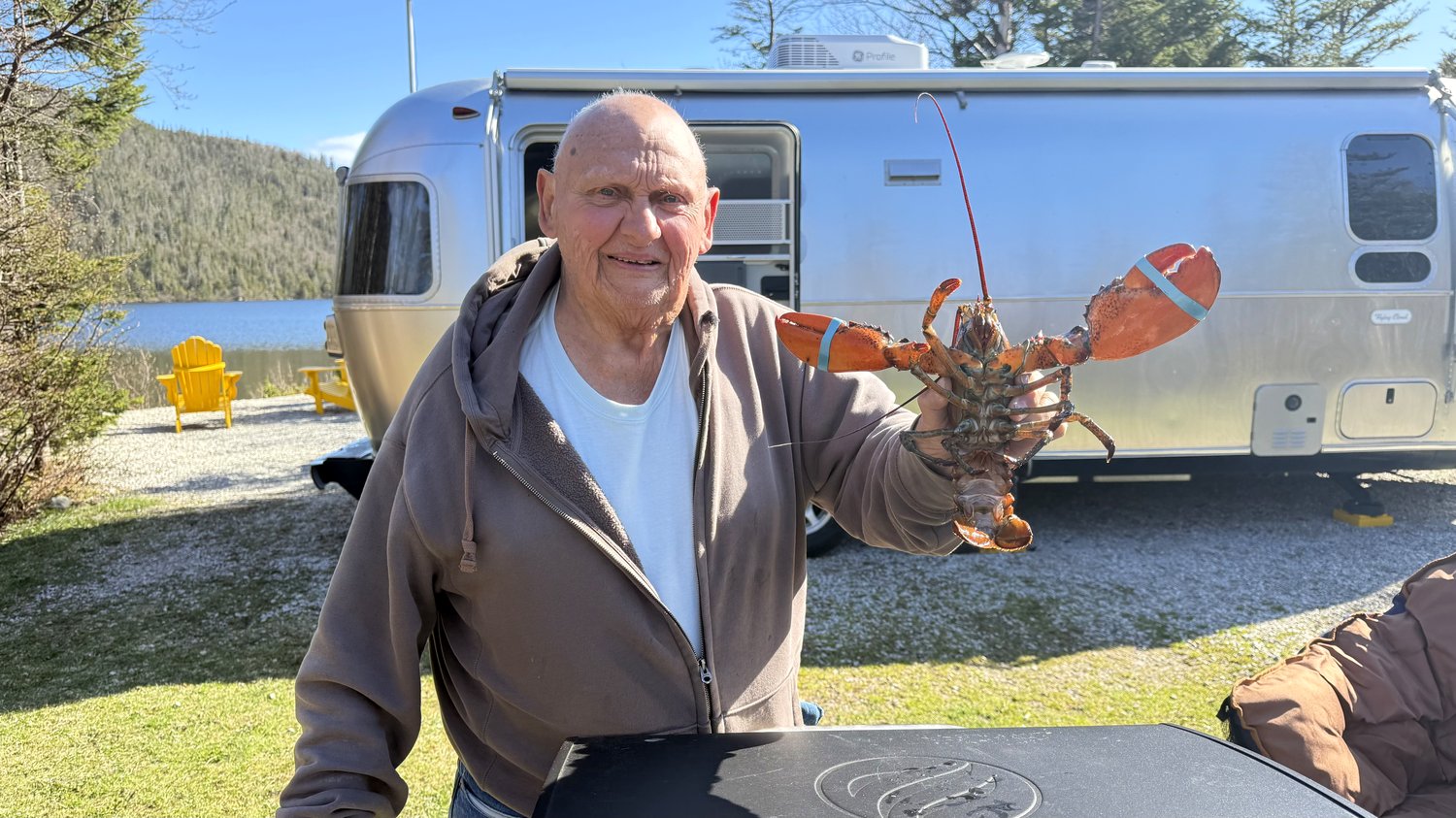
My dad with dinner: fresh Cox Cove lobster, back at camp.
That's the kind of local knowledge you can't Google. You get it from someone who's spent his life there.
Cox Cove is a small town, nestled along the shore. It's mostly a fishing village, with a lot of charm in both the layout and the architecture.
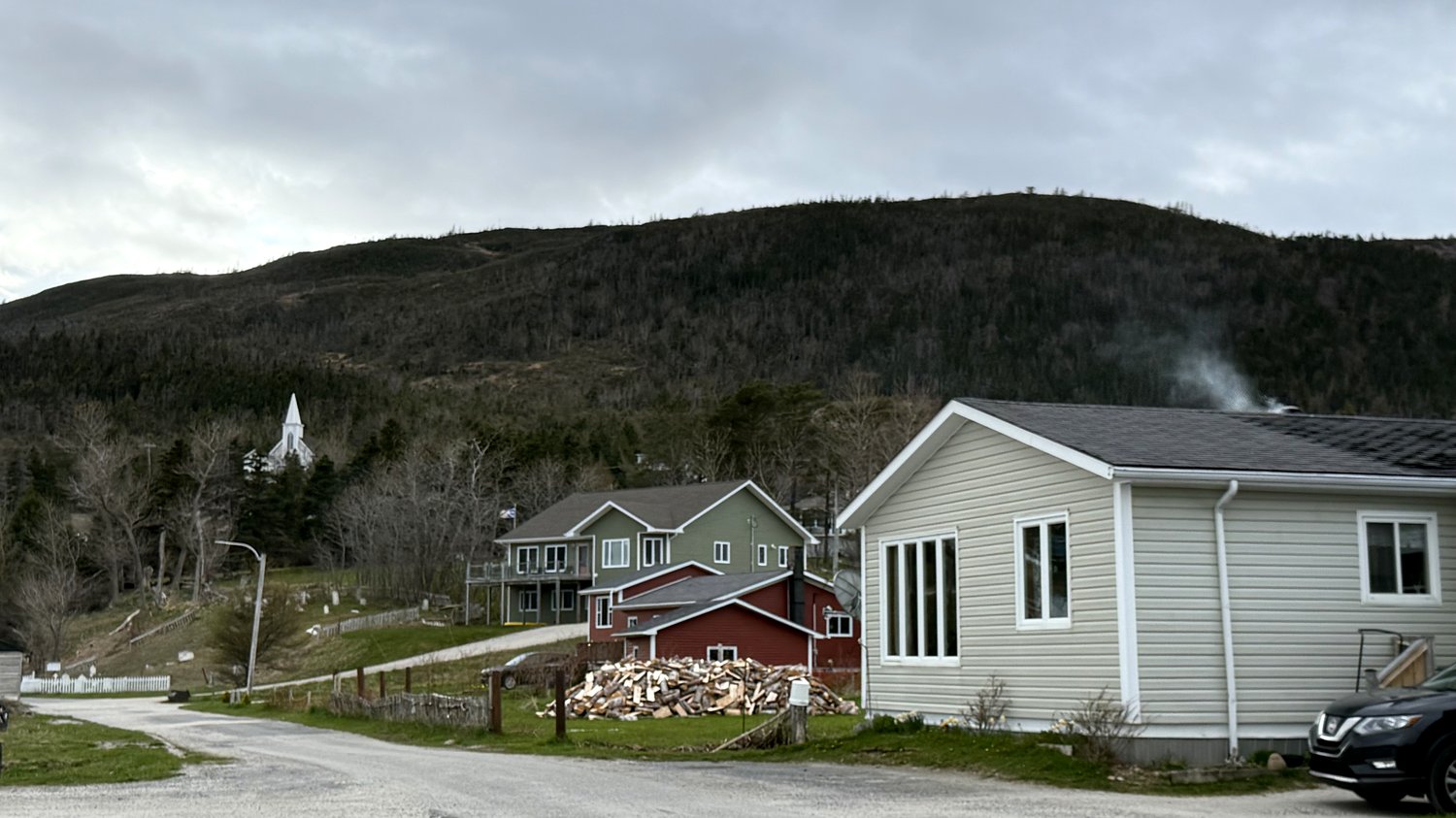
Cox Cove's quaint homes, with the church steeple against the hillside.
Some of the homes along the water are only reachable by boat. That tells you everything about how this place grew up around the water instead of a road.
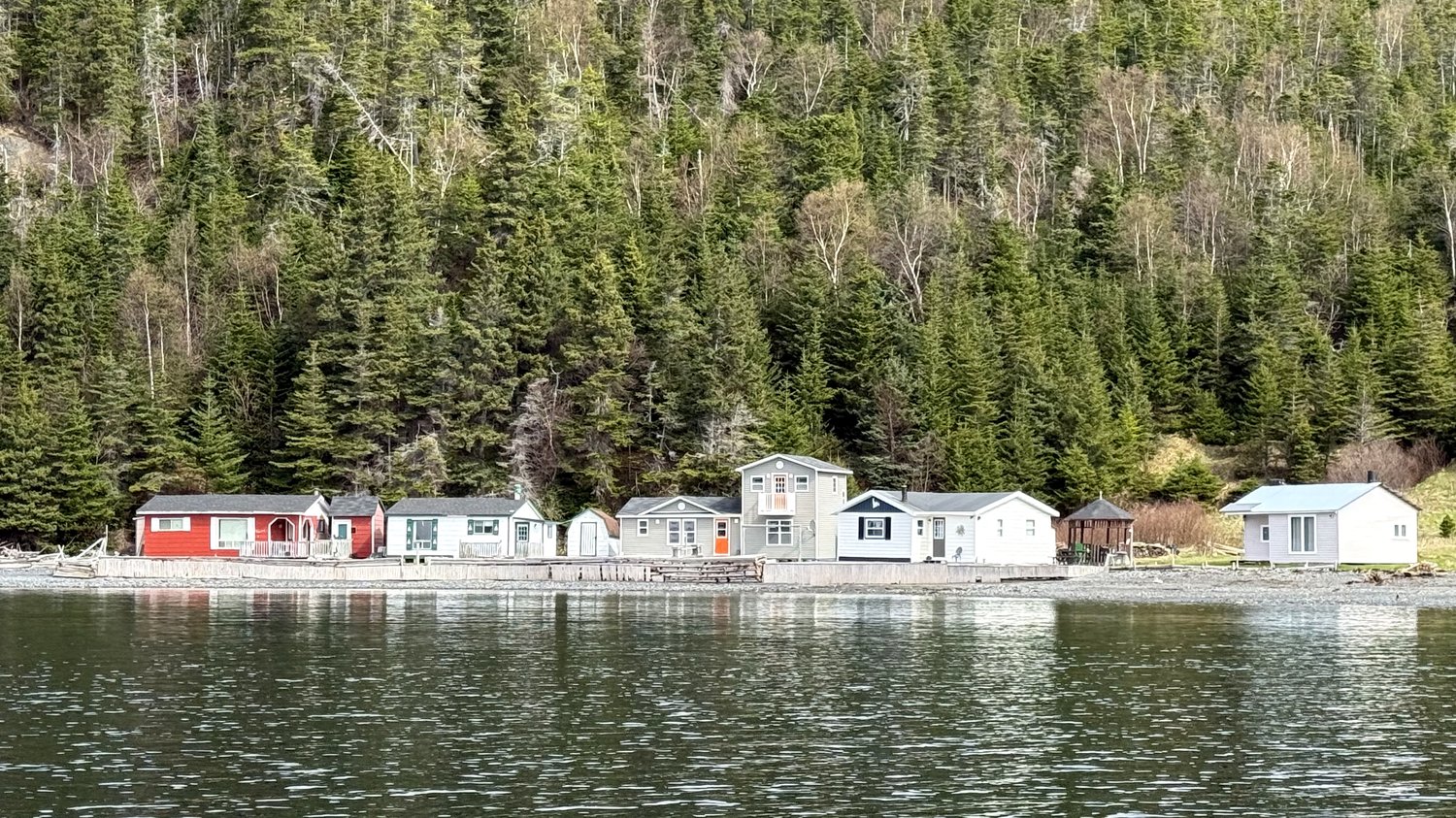
Newfoundlanders are some of the most welcoming, warm people we've met on the road. They enjoy real conversation with visitors, not just small talk, and they seem genuinely glad you came. It's a wonderful little place to visit, and you always feel welcome there.
Yes, without hesitation.
What stays with me isn't really the fish. It's watching Darren make my dad's first dory ride feel special and memorable. Watching an eagle do something we'd never seen in person was amazing, too. That's not something you plan a trip around. It's something you get lucky enough to stumble into, in a small cove most people have never heard of.

We booked this trip through 4 Seasons Tours, Darren Park's outfit right in Cox Cove. If you're headed to Newfoundland's west coast, it's worth a look.
Visit Four Seasons Tours fourseasonstours.ca