Highways · Newfoundland · Wreckhouse
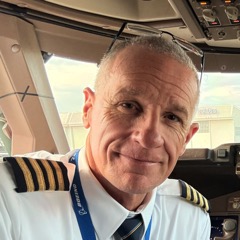 Written by Dan
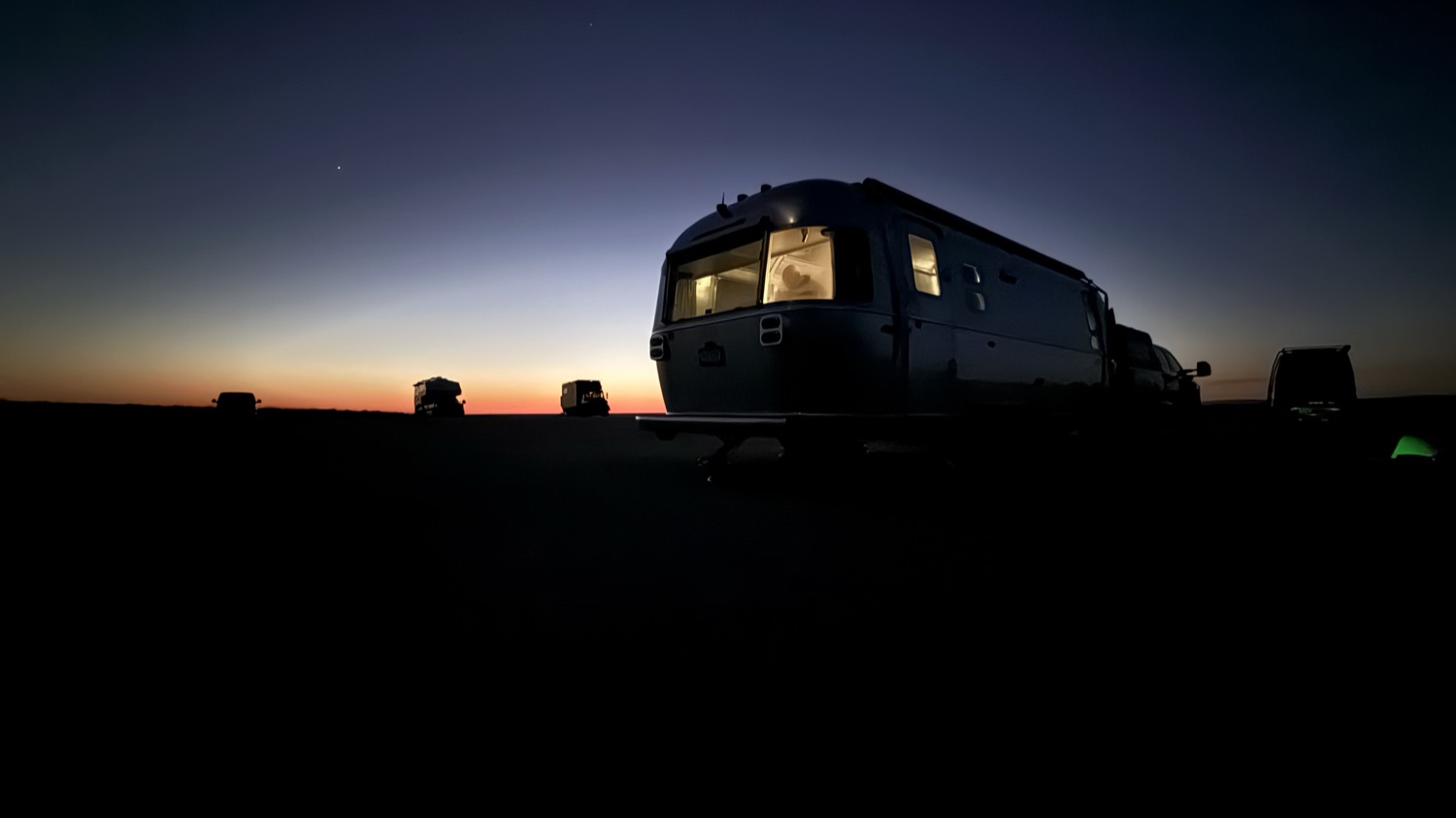
Our first night in Newfoundland.
We spent our first night in Newfoundland in a parking lot. On purpose. We had been meticulously planning this trip for months. And finally, arriving on this island that we've only read about, it all felt suddenly real. We rolled off the ferry in Port aux Basques late in the afternoon, pointed the truck north on the Trans-Canada Highway, or the TCH as it's better known, and headed for our first stop: Wreckhouse.
We didn't plan on driving far that first night, and the reason was simple: moose. Newfoundland has one of the densest moose populations in North America, and the animals aren't even native. A handful were introduced in the early 1900s, found no natural predators, and multiplied into the tens of thousands.
A moose collision isn't like hitting a deer. The animal stands tall enough that a car's hood ducks right underneath it, and the impact comes through the windshield instead of the bumper. Add a 25-foot Airstream, a highway neither of us had ever seen, and failing light, and it isn't a gamble either of us wanted to take on night one. We wanted our first few hours on the island to be enjoyable, not spent squinting into the dark wondering what might step out of the trees.
Our planned destination for the night was a large parking lot located in a place called Wreckhouse. For a roadside pull-off with no amenities whatsoever, it turned out to be one of the more memorable introductions to a place I've had. Even the drive up was a preview: empty highway, big sky, and not another set of headlights in sight. The rest of the ferry traffic hadn't caught up yet.
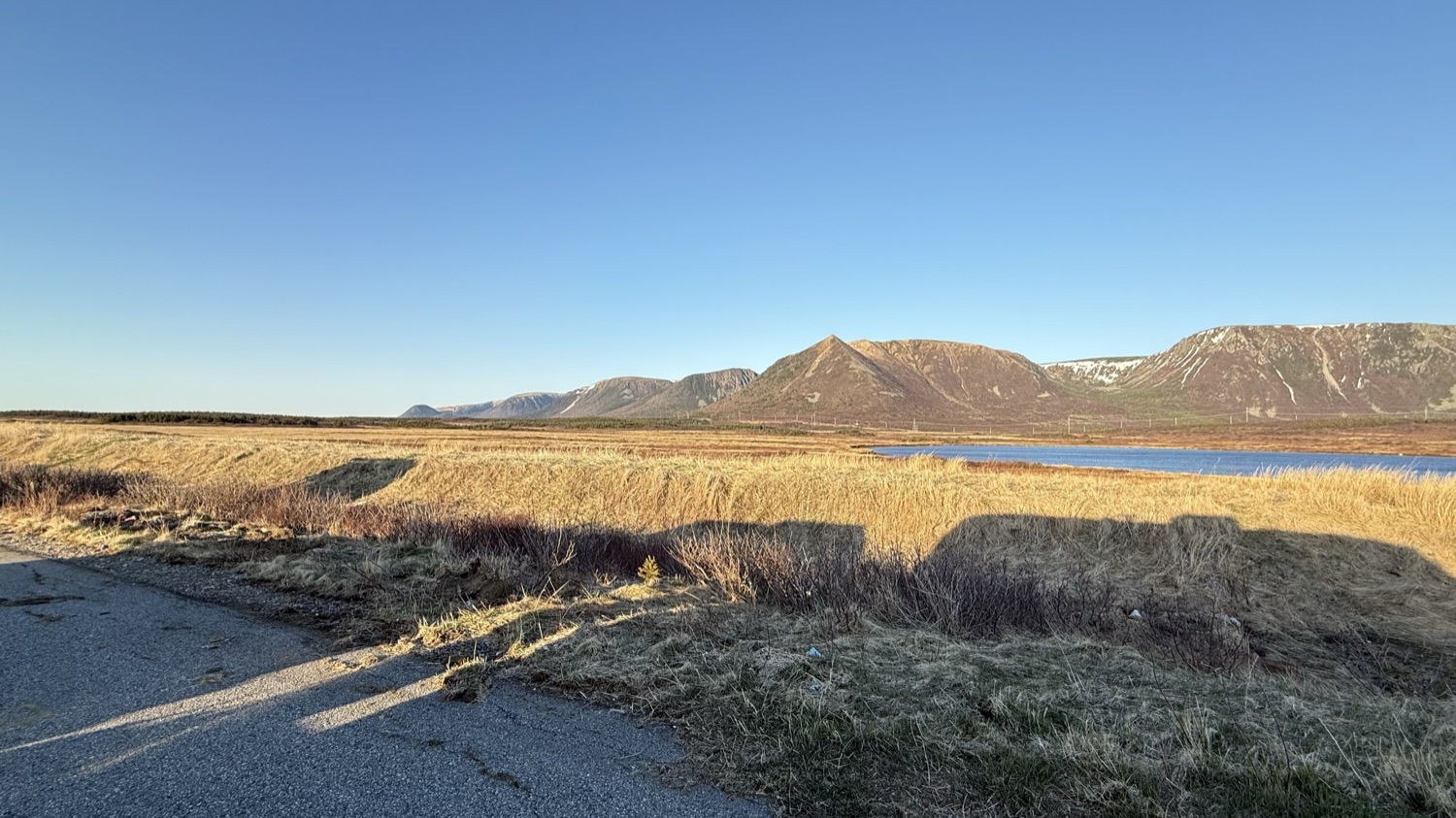
The parking lot at Wreckhouse is nestled between the Gulf of St. Lawrence to the west and the Anguille Mountains to the east. It's become an unofficial gathering spot for RVers and camper vans working their way through southwestern Newfoundland, and it doesn't take long to see why.
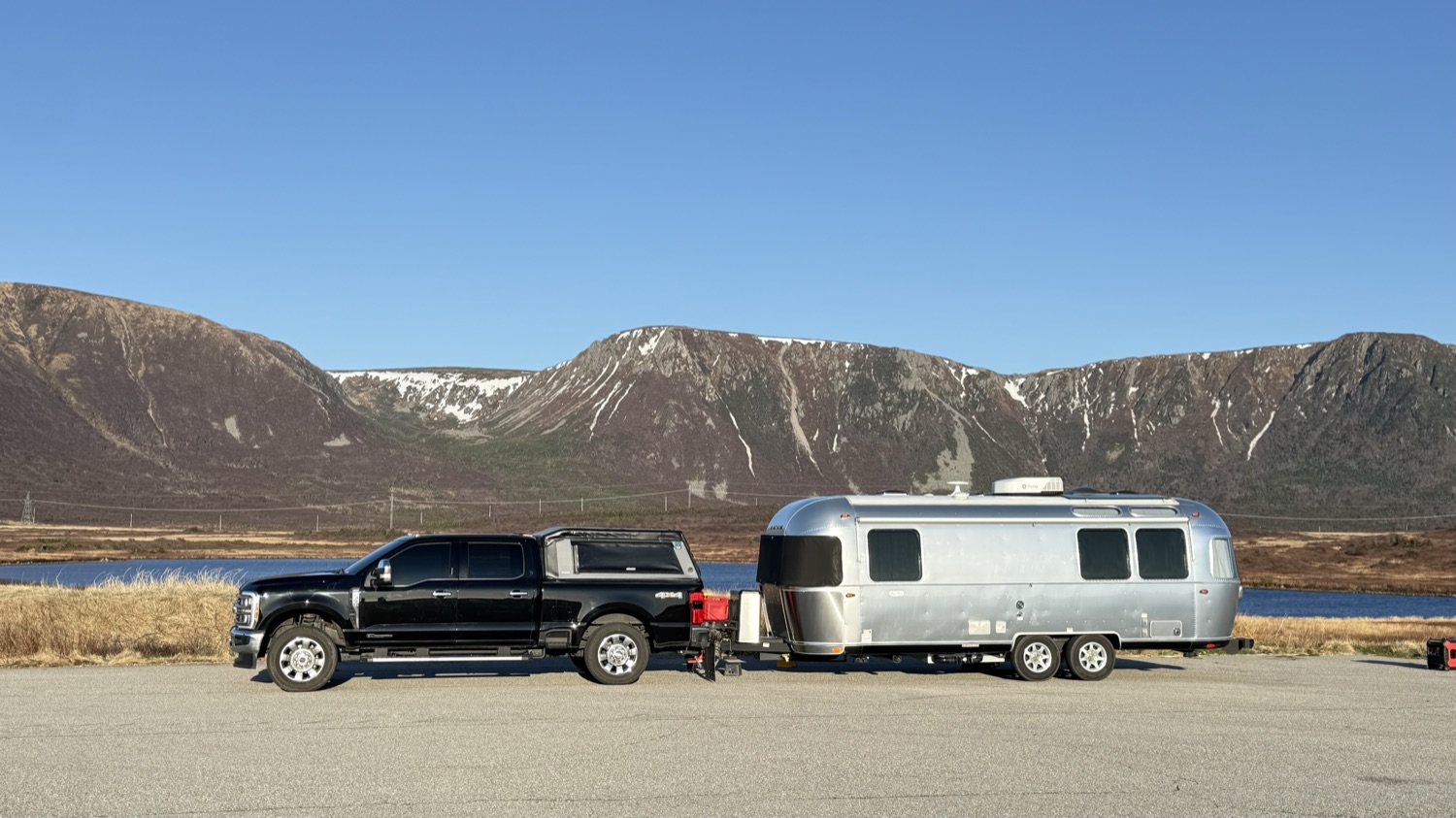
Freshly parked, with the highlands rising up behind us.
I remember seeing the sign for the first time. It stood out prominently, almost like a warning to anyone who didn't know the history or the danger that could sometimes be present at this place. It was worn and battered, and braced by a triangular frame that told me everything I had read about the place was true. But not to us. We were prepared; we had the wind forecasts in hand, and we knew we were okay. After a long day of driving and a nearly six-hour ferry ride, it was a welcome sight. It meant we were finally home for the night.
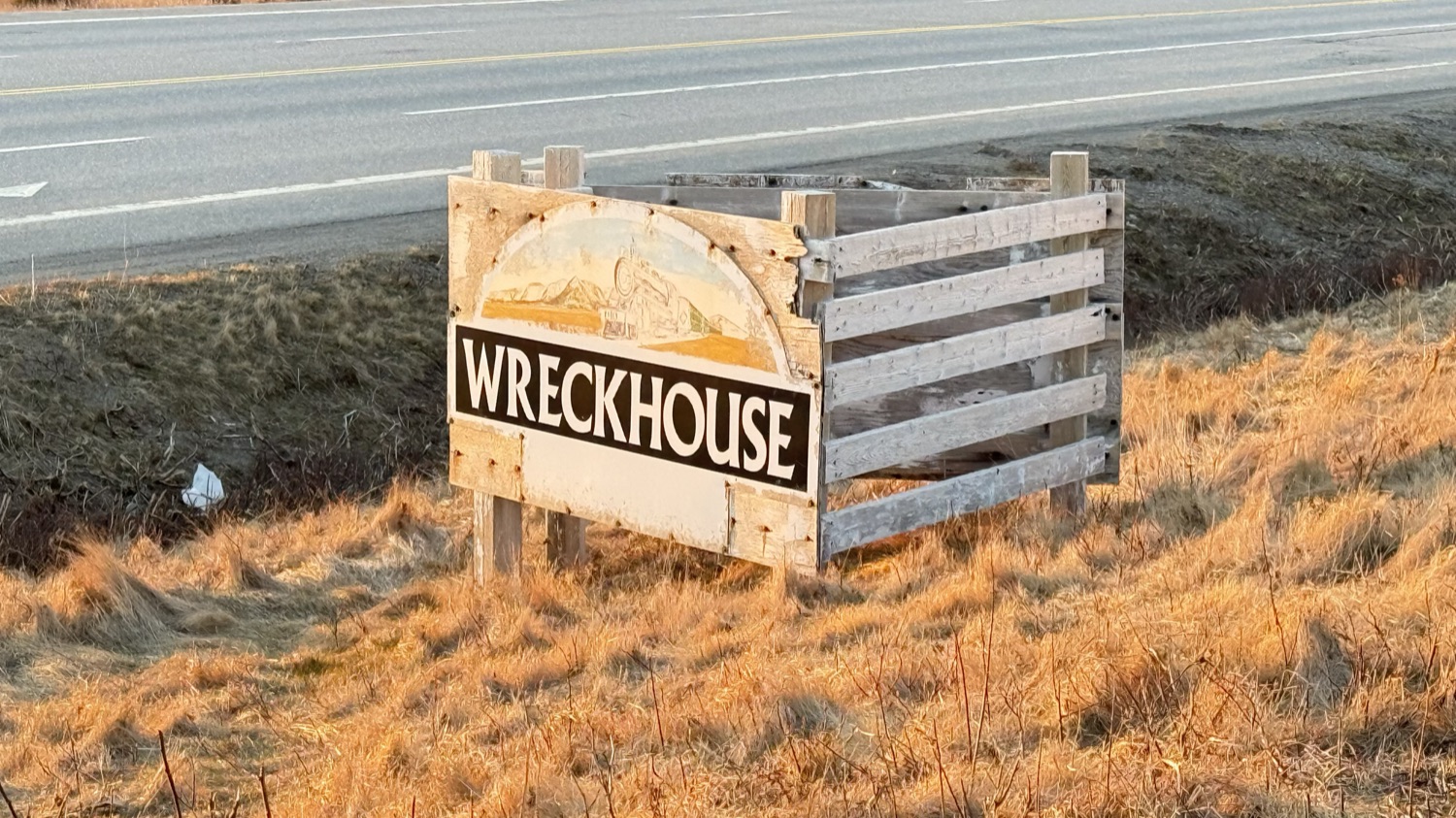
Look closely and there's a little train worked into the artwork. More on that in a minute.
We were fortunate to be parked near the front of the ship, so we were able to get off the ferry early and head north. We were the first ones to arrive at the parking lot, which allowed us to pick any spot we wanted. We settled in toward the back of the lot, which gave us room to get our trailer set up, the generator running, and Starlink up before doing anything else. Starlink worked well, and T-Mobile had some connectivity too. There are no hookups here, no bathhouse, no camp host, and no reservations to make. It's also free. It's simply a plain parking lot that happens to sit in a genuinely beautiful spot, and for one night that was exactly what we wanted.
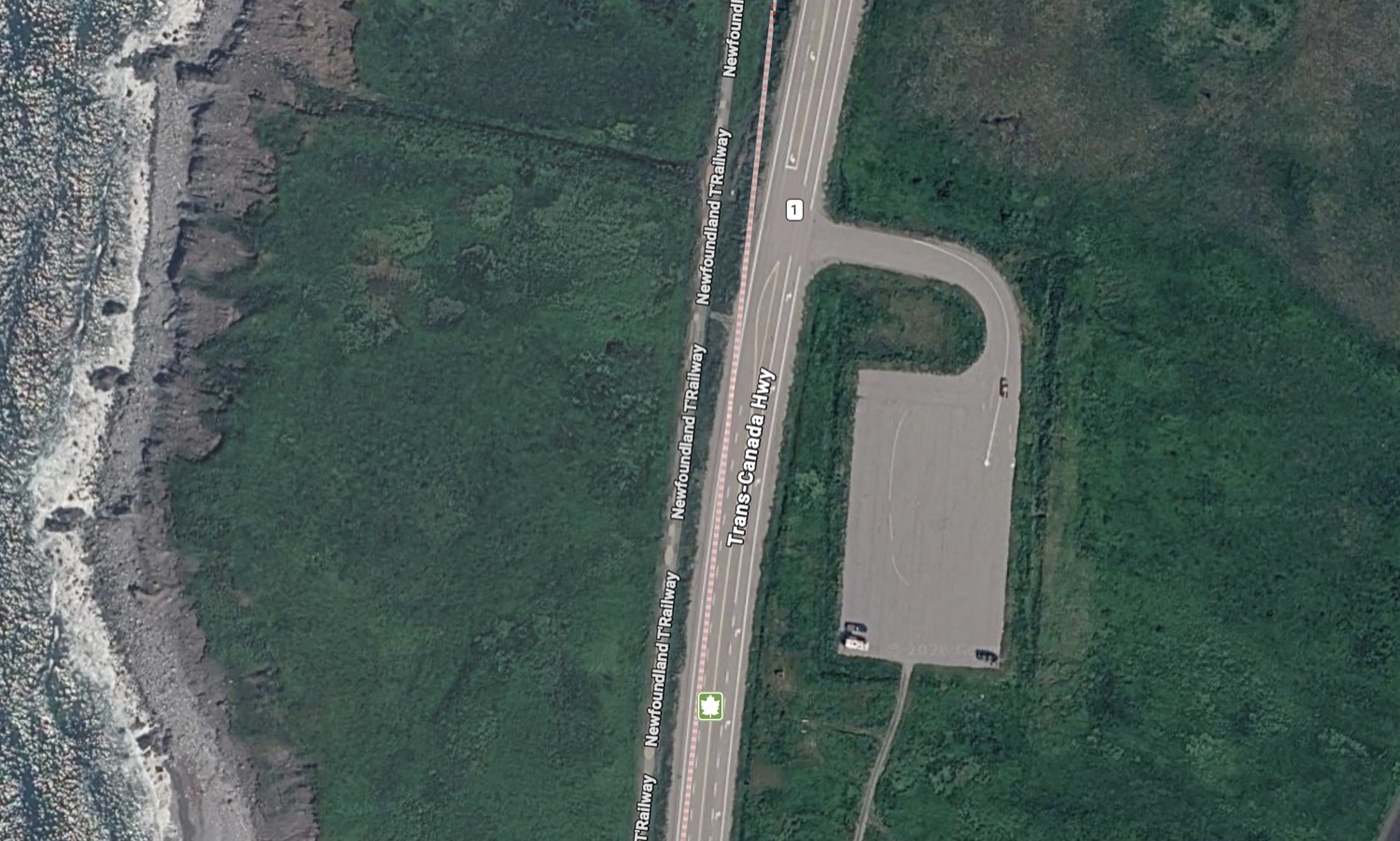
One thing we noticed almost immediately in Newfoundland is how many places there are to stop overnight outside the national parks, without needing a campground reservation booked months out. You still have to read the signs and use some judgment, but compared with plenty of places we've towed through, this island is friendly to people traveling by RV. Wreckhouse is a good example.
By evening, a handful of other rigs had rolled in and found their own spots. Even with the extra company, there was plenty of room for everyone, and it felt like most people understood the same unwritten rule of places like this: spread out, give each other some space, and enjoy the view. It's not uncommon for 18-wheelers to stay the night here too. They idle, so if noise bothers you, park well away from them.
The highway gets a burst of traffic whenever a ferry unloads in Port aux Basques, since a whole boatload of cars, trucks, and RVs all head north at roughly the same time. For a while, a steady stream of headlights passed just a few dozen yards from us. Then, about an hour later, it simply stopped. The highway went quiet, the traffic disappeared, and the only sounds left were the wind and the waves.
Before you spend a night at Wreckhouse, there's one thing you need to understand. Wind. The name of this place is no accident.
This stretch of coast sits right below the Anguille Mountains, and when the wind comes out of the south or southwest, the highlands funnel it down through the gaps like a nozzle and dump it onto the flat coastal barrens right where the highway runs. When the conditions line up, the wind here is brutal.
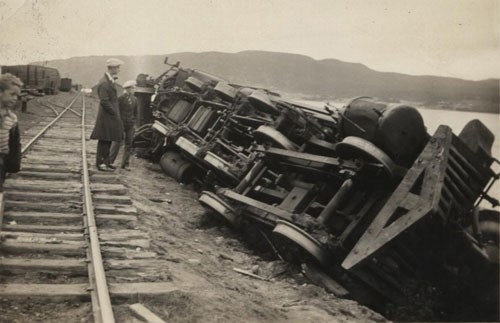
That's actually where the name comes from. Back when the Newfoundland Railway still ran along this same stretch of coast, the wind here was strong enough to blow entire freight cars right off the tracks, not just rock them, but blow them clean off, sometimes for a considerable distance. It happened often enough that railway crews started calling the place Wreckhouse, and the name outlived the railway itself by decades. That's the little train painted on the sign out front.
For thirty years, the railway relied on a local farmer and trapper named Lockie MacDougall (some sources spell it Lauchie McDougall) to read the wind. He was paid $20 a month, and by all accounts he could sense dangerous wind coming before any instrument could. One account says he could smell it. When he said hold the train, they held the train. His wife, Emily, carried on the job after he died in 1965, and a small exhibit honoring him is at the railway museum in Channel-Port aux Basques.
It isn't only history, either. Transport trucks still get blown off the road here now and then, and the numbers are worth knowing:
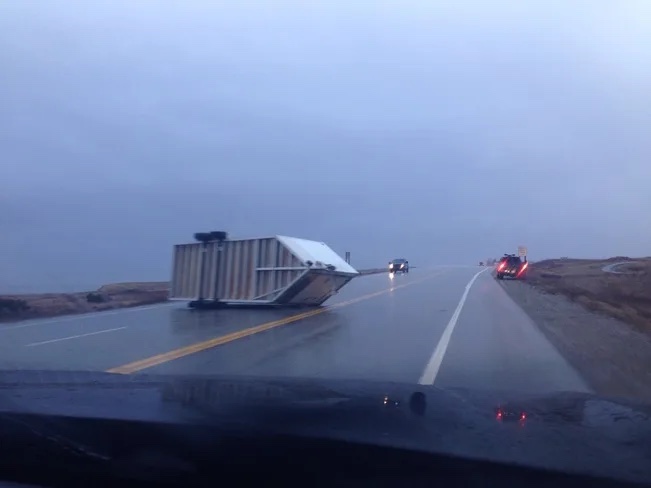
If you're towing anything, check the live Wreckhouse wind warnings from the provincial highway department, or 511NL, before you commit to the night.
If you fly, you already know that wind direction matters as much as speed. At Wreckhouse, direction is nearly the whole story. Check the forecast before you commit to a night here, and if anything ugly is moving in from the south or southwest, think hard about how you park. Don't leave an awning out or anything loose sitting around that could go airborne.
So how was our night? Conditions were manageable. The bigger issue was temperature. We'd started the trip early in the season, and once the sun went down, it dropped fast, below freezing by the time we turned in. We stayed warm enough inside the Airstream, just ran the furnace more than I expected to for a trip in May.
After all that talk of wrecks and wind, nothing dramatic happened at Wreckhouse that night. What I remember most is the evening itself.
I spent the short time I had left of sunlight outside, talking with a few of the neighbors and exploring the barrens along the highway. Heather made a nice dinner for us while I was out.
Out on the barrens, I came across two simple wooden benches that faced the ocean and offered a peaceful place to sit and watch one of the best sunset views I've ever seen.
The highway was desolate, with not a single car or truck passing the entire time I sat there. It was just me, the benches, the ocean, and a beautiful sunset. Despite the chill settling in, I sat and watched the sun set over the water and thought about our days ahead and the adventures they would hold for us.
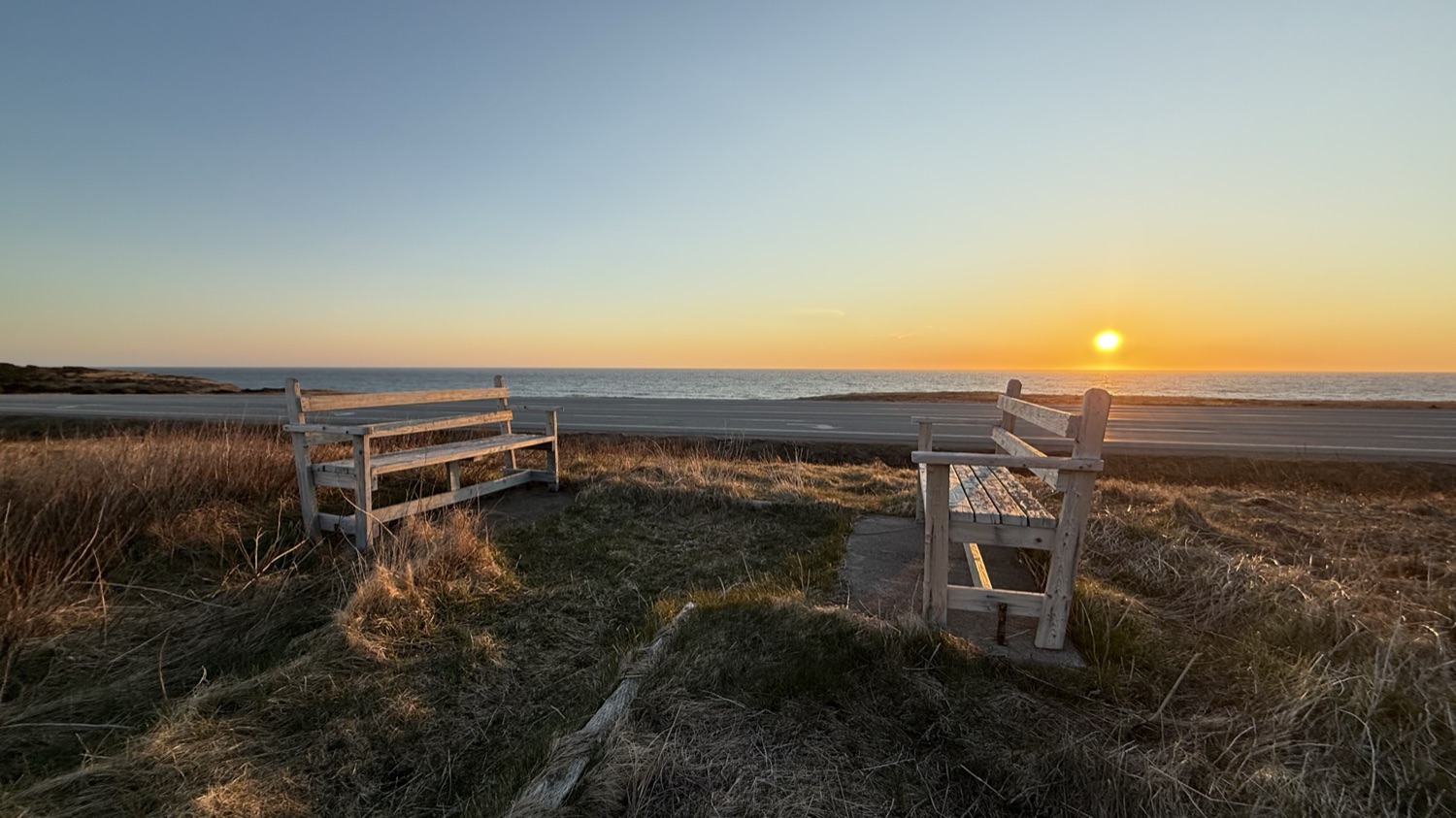
Not a bad spot for a bench.
Later, I stood outside looking back at our Airstream lit up against the fading sky, and it stopped feeling like we were parked in a lot beside a highway. It felt like we'd found someplace special.
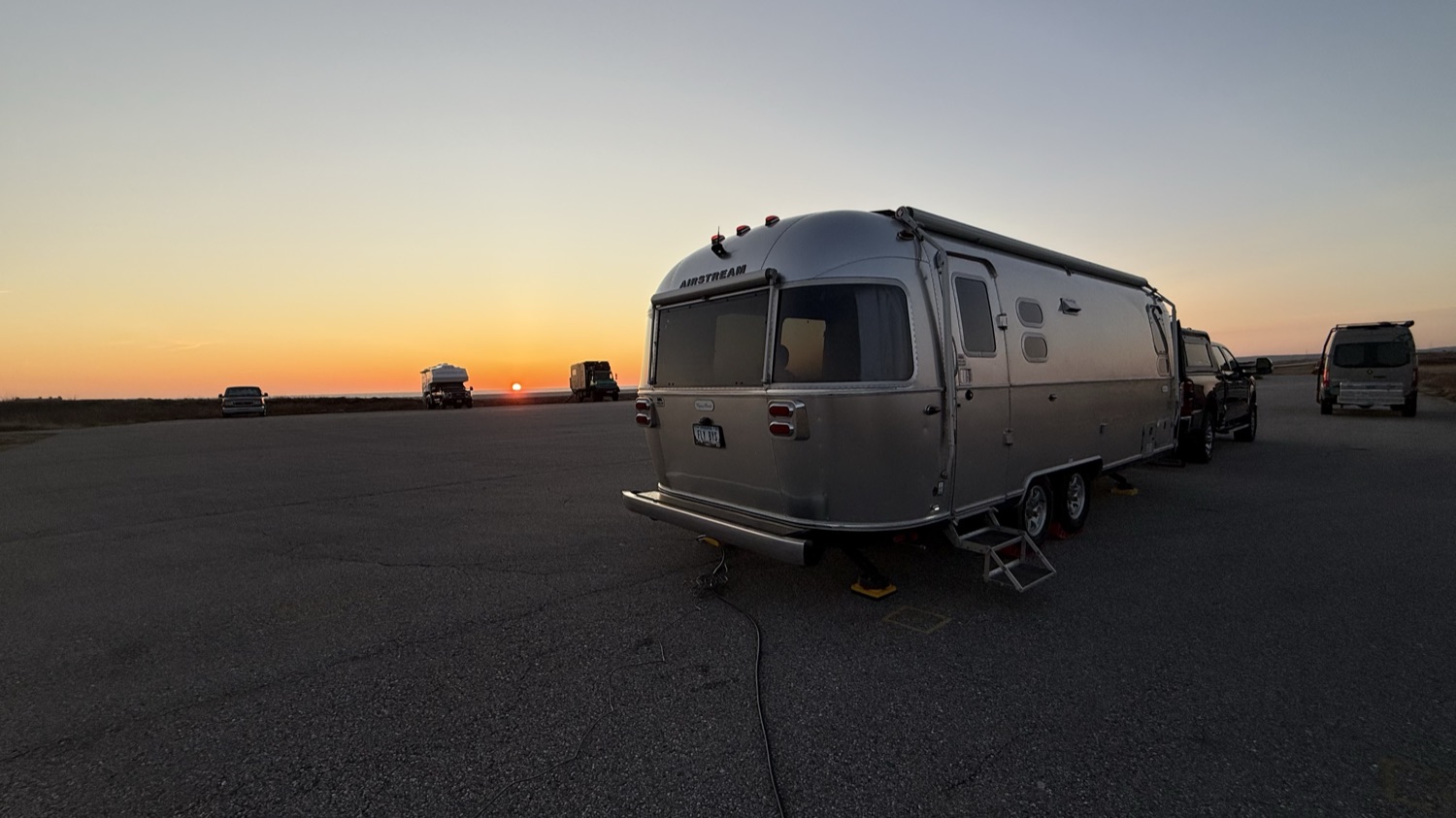
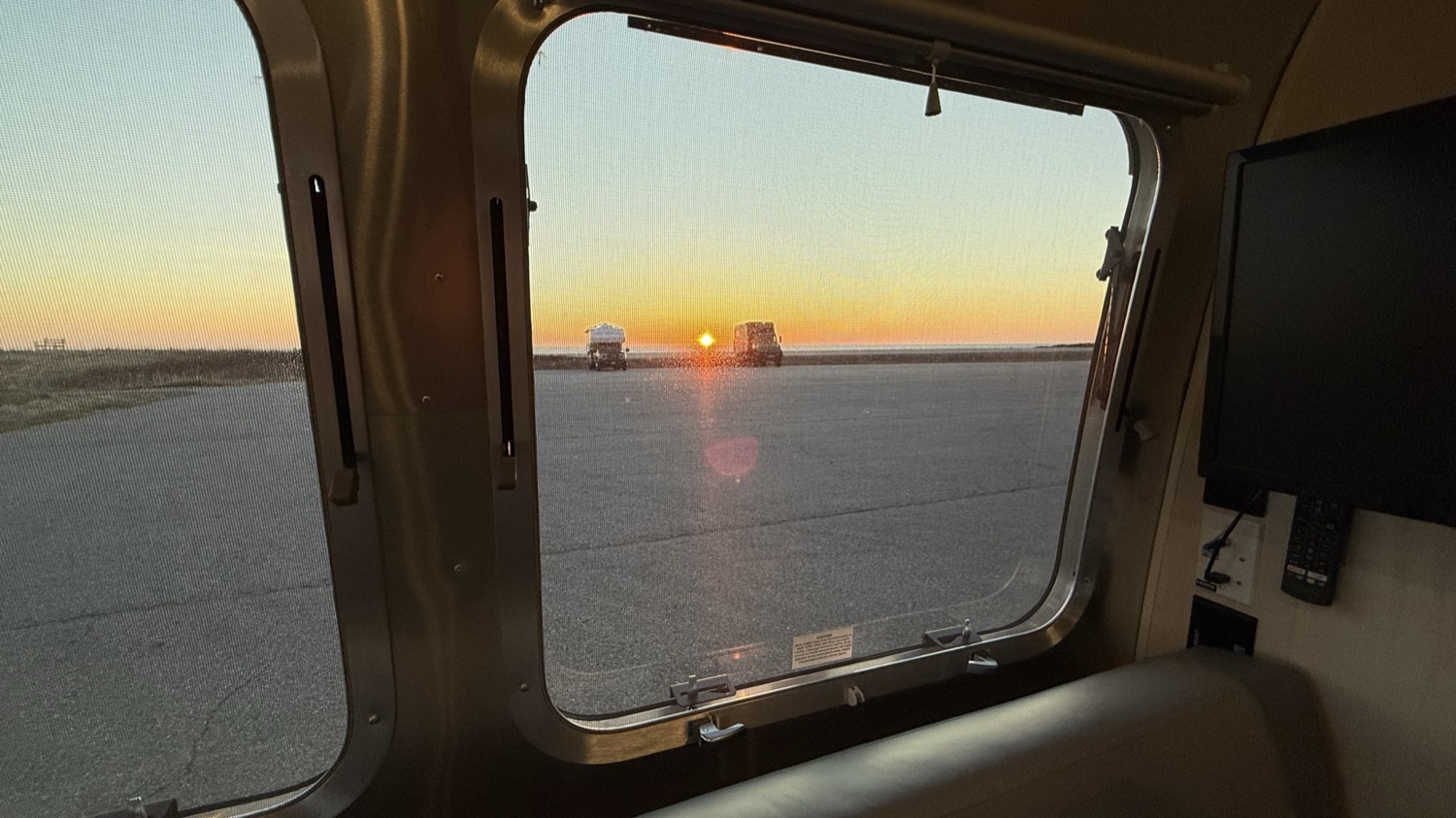
Eventually the sun disappeared for good, leaving just a thin orange line along the horizon. The lights inside the trailer clicked on and glowed against the dark.
That was it. No campground. Nothing on the agenda but a safe place to stop before dark. Just the truck, the Airstream, a parking lot on the Trans-Canada Highway, and the Gulf of St. Lawrence right outside the window. It was perfect.
Wreckhouse isn't for everyone. If you want hookups and a hot shower, or the forecast has the wind signs lit up, these are the two obvious fallbacks near the ferry. Neither is free, and prices below are approximate Canadian dollars, so confirm before you go.
About $27–$38 a night
Roughly $30–$45 a night
The next morning we packed up, pointed the truck north again, and kept going before eventually turning west toward Cape St. George.
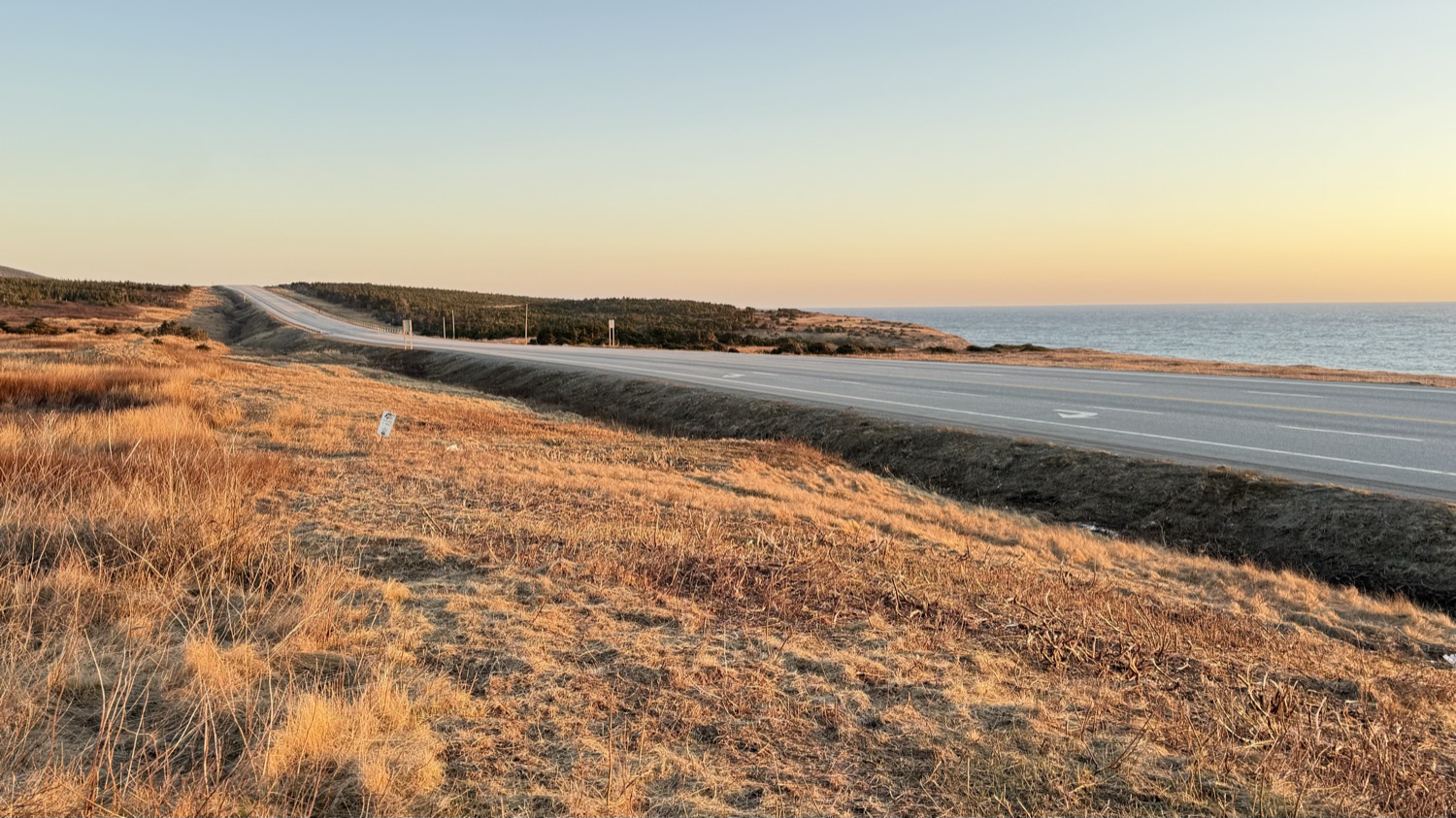
Looking back south toward Port aux Basques, the way we'd come.
Wreckhouse didn't live up to its dangerous reputation that night; it went easy on us. We were at the beginning of our 562-mile journey around the TCH to Ferryland. We had ten more stops ahead of us, and after months of preparation, we were finally here... We were excited to see what adventures, experiences, and sights the rest of the island had in store.